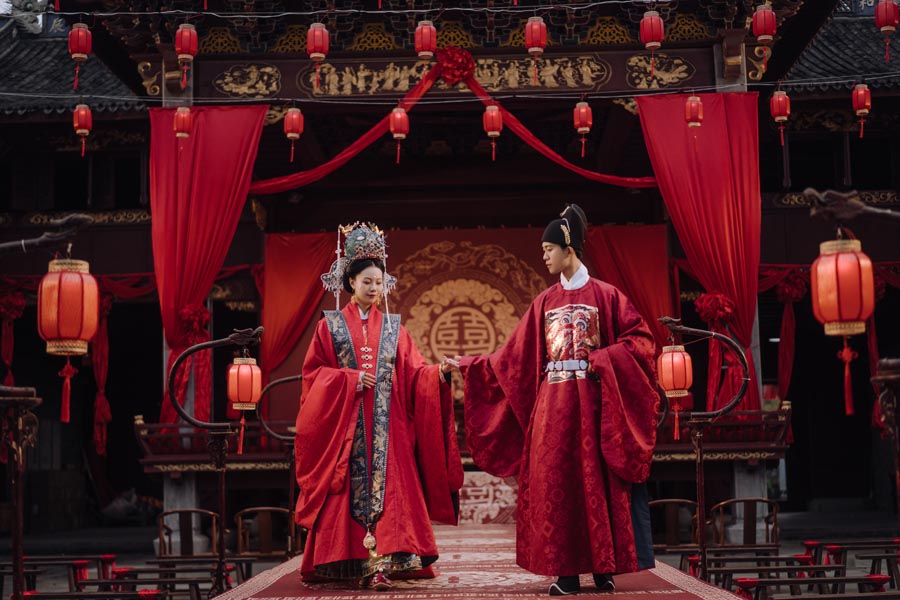
Chinese-style Wedding
Introduction
Chinese-style weddings have seen a resurgence in popularity in recent years, with many couples in China opting for traditional ceremonies that reflect the rich cultural heritage of the country. This revival can be attributed to a growing interest in cultural identity and a desire to reclaim traditional practices in the face of modernity. Unlike Western-style weddings, which often emphasize vows and white gowns, Chinese-style weddings incorporate historical clothing, rituals, and a strong sense of symbolism.
Historical Context and Modern Resurgence
Since the reform and opening-up policy in the late 1970s, Western-style weddings gained popularity in China's urban areas. They were initially perceived as more ceremonial and romantic, often characterized by the exchange of vows and the wearing of white dresses. However, the recent trend has seen a shift back to traditional Chinese weddings, particularly among young couples who seek to reconnect with their cultural roots.
The resurgence of traditional Chinese weddings reflects broader societal trends, including an increased appreciation for cultural traditions and a sense of pride in Chinese heritage. As part of this revival, many couples choose to don garments reminiscent of the Tang Dynasty (618-907), which are rich in history and symbolism. The color red, a traditional symbol of auspiciousness in Chinese culture, dominates the wedding attire and venue decor. Key rituals such as the three-bow ceremony—to heaven and earth, to parents, and to each other—are integral to the ceremony.
Traditional Elements and Rituals
In a traditional Chinese wedding, the focus is on rituals and symbols that convey cultural values and blessings for the couple's future. One significant ritual is the three-bow ceremony, which emphasizes respect for the cosmos, familial bonds, and mutual commitment. Clothing plays a crucial role in these ceremonies, with couples often wearing intricate garments from historical dynasties, such as the Tang or Ming (1368-1644).
Cultural and Social Implications
The renewed interest in Chinese-style weddings is not merely a fashion trend but a reflection of deeper cultural and social shifts. As living standards improve, there's a tendency towards more individualized choices that reflect personal beliefs and values. Experts suggest that this revival is part of a broader movement that places greater value on tradition over modernity.
Moreover, the trend is indicative of a growing cultural confidence among young Chinese people, who are eager to explore and embrace their cultural identity. According to Zhu Yongbiao, executive director of the Belt and Road Research Center at Lanzhou University, this search for cultural identity is a natural development as China continues to progress economically and socially.








